Kitchen: Electric Oven Functions explained - 1
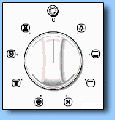
This page is not a cooking guide, but shows some of the many cooking functions available when looking for your oven purchase. Although different manufacturers have different symbol designs, they all look very similar in style to those below.
The quote "you get what you pay for" most definitely applies to appliances, even more so with ovens. Few people research enough to buy the oven they really need that suits their cooking skills and requirements. Instead of having the functions they wish their oven to carry out, they end up buying on impulse as it is cheap, as price is often the main decision with their purchase, actual needs are not thought through correctly. Once you have bought the oven it is too late, so do some research first, you will be surprised how it will change your decision. A better quality appliance will last you for many more years, as the quality build is better and so more reliable - and the oven will carry out all the functions you would expect it to do using your superior cooking skills.
Essential Oven functions - This is page 1 of 3 pages.

Don′t forget an important part of your decisions will be the Appliance Energy Ratings. It's your guarantee that these products have met the strict criteria on energy efficiency, will cost less to run and help reduce carbon emissions. Double click the Energy image (left) to learn about them, and how they can make your products more efficient, and save you money on your electricity too.
Oven Symbols:
Oven light:
 On some ovens this comes on automatically when the oven is turned on. Other ovens have the light on a separate setting. By turning the knob onto this setting, we light the oven cavity. The oven remains alight while any of the functions are on.
Oven Defrost:
 This usually means that the oven fan is turned on, but no heat is being produced. Defrosting is carried out by simple movement of air to speed up defrosting times, but with no heat. Recommended for rapidly defrosting delicate frozen foods such as fish and poultry.
Conventional Oven:
 If referring to the entire oven - this is the most basic and cheapest oven available. Used as a function within an oven, heat is provided by the upper and lower heating elements of the oven, but no fan. The heat is diffused by natural convection. Recommended for foods which require the same cooking temperature both internally and externally e.g. Roasts and Pastries.
Fan Assisted Oven:
 The set function is for the upper and lower heating elements and the fan to be switched on. Heat from the top and bottom elements is diffused by the forced convection from the fan found normally at the rear. The temperature throughout is even and the oven heats up very quickly, reducing cooking times and so saving energy.
Fan Oven:
 The circular heating element surrounds the fan on the inner rear wall and they are both on. The heat is diffused by forced convection. A powerful fan draws air from the interior of the oven. It then heats up the air and forces it right back into the oven cavity through strategically placed shaped air ducts in the rear wall. This system means the oven heats up rapidly, and needs little or no preheating. This is recommended for food that needs to be tender or rare on the inside and well done on the outside such as lamb, roast beef and whole fish. With the better quality fan ovens e.g. Neff′s CircoTherm fan system, you can also cook foods with strong flavours together, without, worrying of them being transferred.
Oven - Bottom Heat only:
 The lower heating element is switched on. For more focused heat and control. This method is ideal for pizza bases and pastry cases where you need a crispy underside or bain marie or casseroles.
Oven - Top Heat only:
 The top heating element is switched on. Perfect for flash browning dishes like cauliflower and macaroni cheese, when you need to achieve a gratin finish.
Oven - Top and Bottom Heat Only:
The top and lower heating element is switched on. Heat travels to the centre of the oven by natural conduction. This is ideal for baking pastries and scones.
Fan Oven - Cooking with Top Heat:
 The upper and circular element, and fan, diffuse the heat by forced convection with most of the heat being produced by the top element.
Fan Oven - with Bottom Heat Only:
 Using a combination of fan and bottom heat. The heat coming from the bottom is diffused by forced convection. This is ideal for anything that needs a crispy underside as pizzas, or speciality breads. It can also be used for one stage pastry such as lemon meringue pie, eliminating the need for blind baking.
Warming Oven:
 Heat is provided from the bottom of the oven only and is distributed by natural convection. This is typically 66°C to 100°C and can be used to keep prepared food warm without drying it out.
Oven - Full Grill:
 The heat is over the entire width of the grill element. Heat is diffused by radiation from the top infra-red heating element by a variable temperature control. The door must be open.
Oven - Part Grill:
 The heat is aimed at a smaller more localised area, normally the centre. Heat is diffused by radiation from the top infra-red heating element by a variable temperature control. The oven door must be open.
Oven - Turbo Grill:
 In this position the upper heating element and the grill element are on simultaneously so that also the corner areas are heated. Heat is radiated over the entire surface area of the grill. This function starts cooking with pre-heating temperature set at 225°C.
Link to conversion chart for Oven Temperatures

Please contact us to discuss your requirements.
Share this page: